

Introduction
The pennsylvania flag is more than a blue banner with a detailed emblem. It represents the Commonwealth’s history, agriculture, commerce, natural resources, peace, and ideals of independence. Its central design is the Pennsylvania coat of arms, which brings several important symbols together in one striking image.
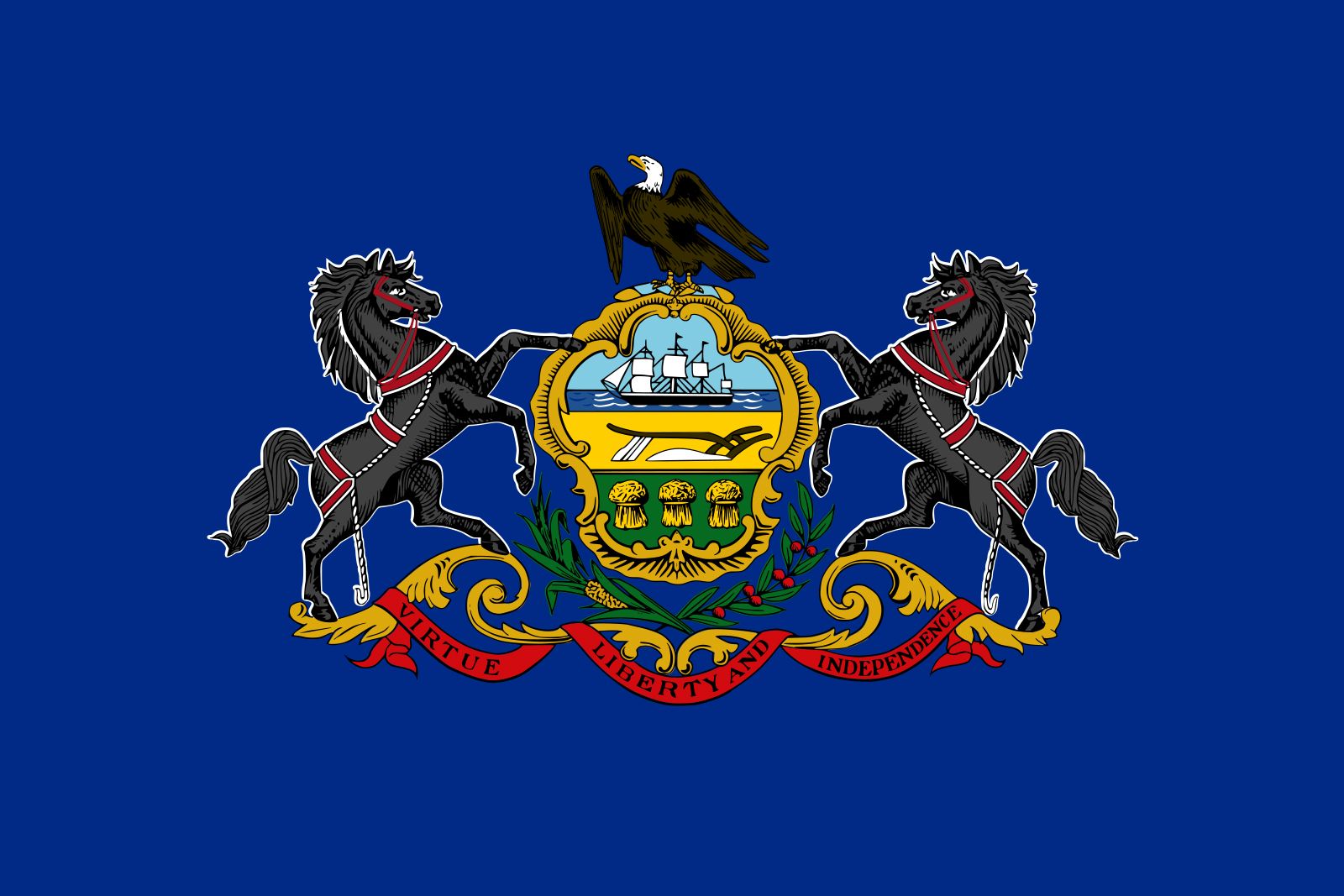
The modern pennsylvania flag has a blue field featuring the state coat of arms. Pennsylvania authorized its first state flag in 1799, while legislation in 1907 standardized the design and specified that the blue field should match the blue of the American flag.
What Does the Pennsylvania Flag Look Like?
The pennsylvania flag has a deep blue background with the Commonwealth’s coat of arms displayed in the center. The coat of arms includes a shield, an eagle above it, two horses on the sides, and symbolic objects beneath the shield.
The shield contains three major images: a sailing ship, a plow, and three sheaves of wheat. Each object connects to an important part of Pennsylvania’s story. The ship represents commerce, the plow reflects natural resources and agriculture, and the wheat represents fertile fields and prosperity.
At the bottom, an olive branch and cornstalk appear beneath the shield. A ribbon carries Pennsylvania’s official motto, “Virtue, Liberty and Independence.” Together, these elements make the flag a visual summary of the Commonwealth’s identity.
History of the Pennsylvania Flag
The history of the pennsylvania flag reaches back more than two centuries. Pennsylvania’s General Assembly authorized the first state flag in 1799. Before that, various military and state-associated flags were used to represent Pennsylvania.
During the Civil War, Pennsylvania regiments used flags influenced by the American flag. Some substituted Pennsylvania’s coat of arms for the field of stars. This helped connect the Commonwealth’s identity with the broader national cause while maintaining a distinct state symbol.
A major change came in 1907. The General Assembly passed legislation that standardized the flag’s appearance and required its blue field to match the blue used in the national flag. This created the standardized design associated with Pennsylvania today.
Meaning Behind the Pennsylvania Flag
Every major part of the pennsylvania flag has a connection to the Commonwealth.
The Ship
The ship on the shield represents Pennsylvania’s commercial activity and trade. Pennsylvania’s location and waterways played important roles in its economic development, and the ship symbolizes commerce reaching beyond the state’s borders.
The Plow
The plow represents Pennsylvania’s agricultural and natural resources. Farming has long been an important part of the Commonwealth’s economy and landscape. The plow also gives the design a strong connection to the land.
Three Sheaves of Wheat
The three sheaves of wheat represent fertile fields and agricultural wealth. They also connect the coat of arms with ideas of productive work and human activity.
Bald Eagle
A bald eagle sits above the shield. The eagle is a powerful symbol associated with the United States and gives the coat of arms a strong connection to American identity.
Horses
Two horses flank the shield. They add balance to the design and emphasize Pennsylvania’s historic connection with transportation, agriculture, and working life.
Olive Branch and Cornstalk
The olive branch represents peace, while the cornstalk represents prosperity. These symbols sit below the shield and help complete the message of the coat of arms.
The Pennsylvania Coat of Arms
The coat of arms is the most recognizable feature of the pennsylvania flag. Its design dates to 1778 and is associated with Caleb Lownes of Philadelphia. The coat of arms later became an important Commonwealth symbol and appears in many official contexts.
It is important to distinguish the coat of arms from the state seal. Although they share some imagery, they are not identical. The Pennsylvania state seal uses the central shield imagery but does not include all of the surrounding features found in the coat of arms.
Why Is the Pennsylvania Flag Important?
The pennsylvania flag provides a simple way to recognize the Commonwealth and its heritage. It appears on government buildings, public grounds, official materials, and at important civic events.
Pennsylvania’s Department of General Services provides rules and guidance for displaying the Commonwealth flag on state facilities. The state flag is also flown alongside the U.S. flag at government locations.
The flag can also take on a ceremonial role during periods of mourning or remembrance. For example, Pennsylvania has issued official orders for the Commonwealth flag to fly at half-staff on occasions honoring fallen public servants and during national observances.
Pennsylvania Flag vs. Pennsylvania State Seal
People sometimes confuse the pennsylvania flag with the state seal because both use similar central imagery. The distinction is straightforward.
The flag places the coat of arms on a blue field. The state seal, meanwhile, has its own official design and purpose for authentication and government documents. The main face of the seal features the shield imagery but does not reproduce the complete coat of arms.
Understanding this difference makes it easier to recognize Pennsylvania’s various official symbols.
Interesting Facts About the Pennsylvania Flag
The pennsylvania flag has several interesting historical features:
- Pennsylvania authorized its first state flag in 1799.
- The coat of arms dates to an earlier period, with its design associated with 1778.
- The flag was standardized by law in 1907.
- Its blue field was required to match the blue of the U.S. flag.
- The central coat of arms combines symbols of commerce, farming, natural resources, peace, and prosperity.
- The state motto is “Virtue, Liberty and Independence.”
FAQs About the Pennsylvania Flag
When was the Pennsylvania flag first authorized?
Pennsylvania’s first state flag was authorized by the General Assembly in 1799.
What is on the Pennsylvania flag?
The pennsylvania flag features the state coat of arms on a blue field. The coat of arms includes a shield with a ship, plow, and three sheaves of wheat, along with an eagle, horses, an olive branch, a cornstalk, and the state motto.
What does the blue mean on the Pennsylvania flag?
The blue field is part of the flag’s standardized design. Pennsylvania’s 1907 legislation required the blue to match the blue of the national flag.
What is Pennsylvania’s motto?
Pennsylvania’s motto is “Virtue, Liberty and Independence.” It appears on the ribbon beneath the coat of arms.
When was the Pennsylvania flag standardized?
The flag was standardized through an act of the General Assembly on June 13, 1907.
Conclusion
The pennsylvania flag brings together centuries of Pennsylvania history in a single design. Its blue field provides a strong background for the coat of arms, while the ship, plow, wheat, eagle, horses, olive branch, and cornstalk each contribute to its symbolism.
From its first authorization in 1799 to its standardization in 1907, the pennsylvania flag has remained an important Commonwealth symbol. Today, it continues to appear at government buildings, public ceremonies, and events across Pennsylvania, representing the state’s heritage and the ideals expressed in its motto: Virtue, Liberty and Independence.








Leave a Reply