

Introduction
The word mikado has more than one interesting meaning. Today, many people recognize it as the name of a classic pick-up-sticks game that challenges players to use patience, steady hands, and careful observation. The game looks simple at first, but even a small movement can end a player’s turn. This combination of simplicity and skill has helped it remain popular as a family and social game.
The term also has a historical connection with Japan. In English, mikado was once used as a title for the emperor of Japan. The word comes from Japanese elements associated with an honorable or exalted gate, referring to the imperial palace. The title is now considered obsolete in modern English usage.
What Is Mikado?
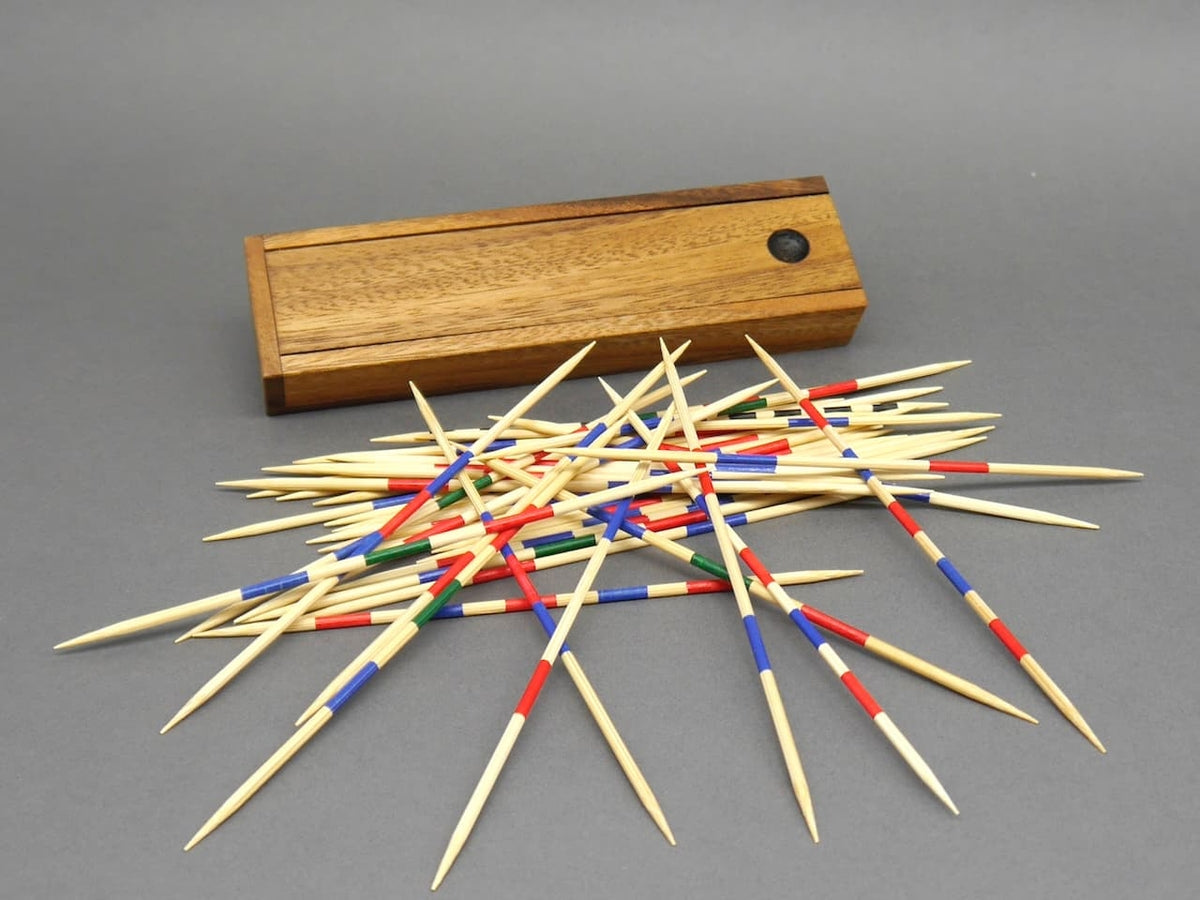
In the gaming world, mikado refers to a variation of pick-up sticks. Players drop a bundle of thin sticks onto a flat surface, creating a random pile. They then take turns removing individual sticks without disturbing the others.
The challenge comes from precision. A player must judge the position of each stick before attempting to remove it. If another stick moves during the attempt, the turn normally ends. Different colored or patterned sticks carry different point values, so players must balance easy opportunities with higher-value targets.
A traditional set commonly contains 41 sticks with several categories and point values. The special Mikado stick carries the highest value in the classic scoring system.
History and Origin of Mikado
Although its name sounds Japanese, the modern mikado stick game has European roots. Historical examples of related pick-up-stick games date back centuries, and versions were known under names such as spillikins and jackstraws.
The exact ancient origin of stick-removal games remains difficult to establish. Some accounts connect similar games with older Eastern traditions, while documented European versions became particularly important in the development of the modern game. The name “Mikado” became associated with the highest-value stick, which was named after the former English title for the Japanese emperor.
This history makes the game particularly interesting because its modern identity combines European game traditions with terminology borrowed from Japanese history.
How to Play Mikado
Playing mikado requires very few materials. You need a set of sticks and a flat playing surface.
Step 1: Prepare the Sticks
Hold the complete bundle of sticks in one hand. Keep the bundle together above the table or playing surface.
Step 2: Drop the Sticks
Release the sticks so they fall into a loose pile. The sticks should form a scattered arrangement rather than remain neatly stacked.
Step 3: Choose a Stick
The first player selects one stick to remove. The goal is to lift it without making another stick move.
Players can carefully use their fingers to remove accessible sticks. Some traditional rule sets allow the special Mikado stick to act as a tool after a player successfully obtains it.
Step 4: Continue or Pass
If the player successfully removes a stick without disturbing another, they can continue according to the agreed rules. If another stick moves, the turn ends and play passes to the next person.
Mikado Scoring System
Scoring makes the game more strategic. In a classic 41-stick set, different stick types have different values.
The highest-value Mikado stick is worth 20 points in the traditional scoring system. Five Mandarin sticks are worth 10 points each, five Bonzen sticks are worth 5 points each, 15 Samurai sticks are worth 3 points each, and 15 Kuli or Worker sticks are worth 2 points each. Together, these values produce a total of 170 points.
Because high-value sticks can be harder to remove safely, players must decide whether a risky attempt is worth taking.
Skills You Can Develop While Playing
One reason mikado remains appealing is that it rewards several useful skills.
Concentration
Players need to watch the entire pile carefully. Looking only at the target stick can cause them to miss nearby movements.
Hand-Eye Coordination
Removing a thin stick from a crowded pile requires controlled movement. Players learn to coordinate what they see with how they move their hands.
Patience
Rushing often creates mistakes. Successful players take time to study the position of the sticks before making a move.
Strategic Thinking
The highest-value stick is not always the best immediate choice. A player may choose an easier stick first to improve their position and reduce risk.
Why Mikado Is Still Popular
Modern games often use screens, complicated rules, or large collections of components. Mikado offers something very different: a straightforward physical challenge.
A complete game can fit easily on a table, and the rules are simple enough for new players to understand quickly. Different manufacturers also produce variations in stick size, number, materials, and scoring rules. Giant versions can provide a different experience for outdoor play.
The game also encourages people to interact face-to-face. Players watch one another’s moves, react to successful attempts, and often develop their own house rules.
Mikado vs. Pick-Up Sticks
Mikado and pick-up sticks share the same basic concept: remove sticks from a pile without disturbing the remaining pieces.
The main difference often comes from naming, regional traditions, and scoring systems. “Pick-up sticks” is a broad name for the family of games, while Mikado commonly refers to a specific European-style version with colored sticks and a designated high-value Mikado stick.
The Other Meaning of Mikado
Beyond the game, mikado has an important historical meaning. English dictionaries define it as a former title for the emperor of Japan. Its Japanese origin relates to an honorable or exalted gate and the imperial palace.
The term also appears in the title of The Mikado, the famous comic operetta by W. S. Gilbert and Arthur Sullivan, first performed in 1885. The work uses a fictional Japanese setting and characters.
Frequently Asked Questions
Is mikado the same as pick-up sticks?
They are closely related. Mikado is a specific version of the pick-up-sticks family, commonly featuring colored sticks with different point values.
How many sticks are in a classic mikado set?
A traditional set commonly contains 41 sticks. Different commercial versions can contain different numbers.
What is the goal of mikado?
The goal is to collect sticks without disturbing other sticks and earn more points than the other players.
Why is it called mikado?
The game takes its name from the highest-scoring stick, which is associated with the former English title “Mikado” for the emperor of Japan.
Is mikado difficult to learn?
The basic rules are easy to understand, but successful play requires concentration, patience, and precise movements.
Conclusion
Mikado is a simple game with surprising depth. Its basic objective—removing sticks without disturbing the others—takes only a moment to understand, yet players quickly discover that precision and strategy matter. Traditional scoring adds another layer because different sticks offer different rewards and levels of risk.
The word mikado also carries a fascinating history beyond the game. From its former use as a title for the Japanese emperor to its appearance in the famous Gilbert and Sullivan operetta, the term has developed several meanings. Whether you encounter mikado as a historical word or as a classic tabletop game, it remains a distinctive term with a rich cultural and gaming background.










Leave a Reply