

Introduction
The word lucipara may look unusual at first, but it appears in scientific names connected with several moth species. One of the best-known examples is Euplexia lucipara, commonly called the Small Angle Shades. This fascinating nocturnal moth belongs to the family Noctuidae and occurs across large parts of Europe and Asia. Scientific databases recognize Euplexia lucipara as the current valid name for the species originally described by Carl Linnaeus in 1758.
The Small Angle Shades attracts attention because of its subtle appearance, nighttime activity, and ability to blend into its surroundings. Its resting position can make the folded forewings resemble a dry or dead leaf, giving it an excellent natural form of camouflage. Researchers have also studied its genome, making this small moth an interesting subject for modern biodiversity research.
What Is Lucipara?
In the context of moth research, Euplexia lucipara is a species in the genus Euplexia. It belongs to the order Lepidoptera, which includes moths and butterflies, and the family Noctuidae. The species was first described by Carl Linnaeus in the tenth edition of Systema Naturae in 1758.
The name can sometimes create confusion because lucipara also appears in the scientific names of other organisms. For example, taxonomic databases list Acleris lucipara, a tortricid moth associated with India, as well as other historical or scientific combinations containing the same word.
For general moth enthusiasts, however, the term most commonly encountered in European references points toward Euplexia lucipara, the Small Angle Shades.
Appearance of the Small Angle Shades
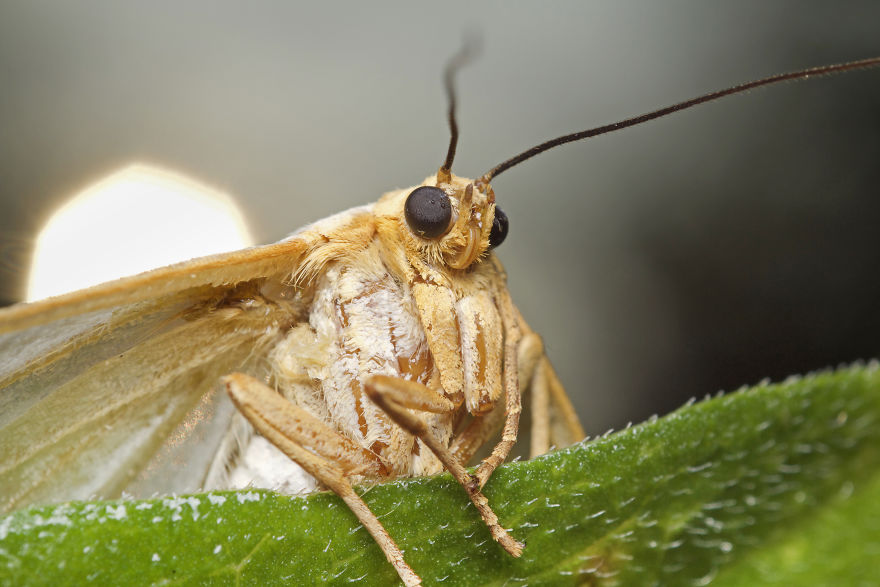
The Small Angle Shades is a relatively small moth with a wingspan of roughly 30–35 millimeters. Its forewings generally have dark brown coloring combined with a lighter band toward the outer portion. The hindwings are paler near the body and become darker toward the edges.
Its appearance provides an important survival advantage. When the moth settles down and folds its wings, the shape can resemble a dried leaf. This camouflage helps it remain difficult for predators to notice during daylight hours. Research on the species also notes its distinctive resting posture and relatively limited variation in appearance across its range.
Where Does Lucipara Live?
Euplexia lucipara has a broad distribution across the Palearctic. Records place it throughout much of temperate Europe and across parts of Asia, extending as far east as Japan. It also occurs widely in Britain and Ireland.
The species can occupy a variety of habitats. Woodland, areas containing ferns, coastal locations, and other vegetation-rich environments can provide suitable conditions. In Sussex, for example, local moth records describe it as a resident species found in a wide range of habitats, although its abundance can vary considerably from one location to another.
What Does Lucipara Eat?
Like many moths, the Small Angle Shades has different food requirements during its larval and adult stages. Its caterpillars can feed on a range of plants. Bracken and other ferns are particularly notable food plants, while research also records the larvae feeding on various flowering plants.
This plant-feeding stage connects the species closely with its surrounding ecosystem. Caterpillars transform plant material into energy and biomass, while adult moths become part of the food web for other animals.
When Is Lucipara Active?
The Small Angle Shades is primarily a nighttime moth. In Britain, adults are commonly seen during the warmer months, particularly around June and July. Some populations can produce a second generation later in the year, with additional adults appearing around September.
Local observations can vary depending on weather, habitat, and geography. Sussex records, for instance, describe a main flight period from approximately mid-May to mid-August, with a sporadic partial second emergence between mid-September and late October.
How Does Lucipara Behave?
Nighttime activity is one of the most interesting features of this moth. Adults can be attracted to artificial light, which makes light trapping a useful method for moth monitoring and recording. They may also be attracted to sugary food sources used by moth recorders.
During the day, camouflage becomes more important. Instead of drawing attention to itself, the moth can remain relatively inconspicuous among vegetation and leaf litter.
Why Is Lucipara Important?
Although a small moth may seem insignificant, species such as Euplexia lucipara contribute to healthy ecosystems. Its caterpillars interact with vegetation, while both larvae and adults can provide food for predators.
The species also has scientific value. Researchers have produced a genome sequence for the Small Angle Shades, contributing to wider efforts to understand insect diversity and genetics. Such research can help scientists build better knowledge of moth evolution and biodiversity.
Is Lucipara the Same as Other Species With This Name?
No. This is an important point when researching lucipara online. The word occurs in more than one scientific name. For example, Acleris lucipara is a different moth belonging to the family Tortricidae and is recorded from Assam, India.
There are also historical scientific combinations involving lucipara. Therefore, identifying the complete scientific name is essential when looking for accurate information.
Frequently Asked Questions
What is lucipara?
In a well-known biological context, it refers to Euplexia lucipara, the Small Angle Shades, a nocturnal moth in the family Noctuidae.
What does the Small Angle Shades look like?
It has predominantly brown forewings with lighter markings and paler hindwings. Its folded-wing resting posture can resemble a dead leaf.
Where can it be found?
Euplexia lucipara occurs across much of Europe and extends through parts of temperate Asia to Japan. It is also widely recorded in Britain and Ireland.
Is lucipara a butterfly?
No. Euplexia lucipara is a moth, not a butterfly. It belongs to the order Lepidoptera but is classified within the moth family Noctuidae.
Are there other species called lucipara?
Yes. The word appears in the scientific names of several moth taxa, including Acleris lucipara. That is why the full scientific name matters when identifying a species.
Conclusion
Lucipara is an intriguing scientific term with connections to more than one moth species. The most prominent example is Euplexia lucipara, or the Small Angle Shades, a beautifully camouflaged nocturnal moth found across broad areas of Europe and Asia. Its plant-feeding caterpillars, nighttime behavior, distinctive resting posture, and wide distribution make it an interesting part of the natural world.
Learning about species such as Euplexia lucipara also shows why even small insects deserve attention. They form important links within ecosystems and provide valuable opportunities for scientific research. Whether you encounter this moth in a field guide, biodiversity database, or nighttime moth survey, lucipara represents a fascinating example of insect diversity and natural adaptation.











Leave a Reply