

Introduction
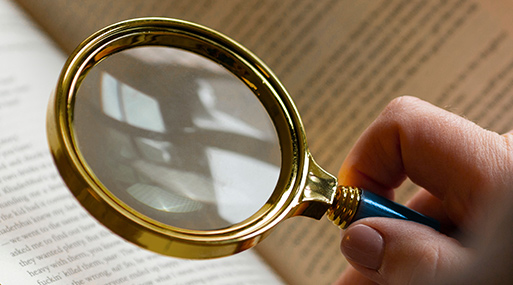
Have you ever struggled to read tiny words on a label, examine a small object, or notice details on a coin? A magnifying glass can make these tasks much easier. But what is a magnifying glass used for beyond simply making things look bigger? This simple optical tool has many practical uses in reading, hobbies, education, nature study, crafts, repairs, and close-up inspection.
A traditional magnifying glass contains a convex lens that bends light and makes nearby objects appear larger. Because it does not normally need electricity, it offers a quick and convenient way to inspect small details. From students examining leaves to collectors studying stamps, people use magnifiers in many everyday situations.
What Is a Magnifying Glass?
A magnifying glass is an optical device designed to enlarge the appearance of an object. Most traditional models contain a convex lens mounted inside a frame with a handle. Some modern versions include a stand, built-in light, multiple lenses, or hands-free support.
The curved lens changes the path of light entering your eyes. When you position an object correctly in relation to the lens, you see an enlarged image. The amount of enlargement depends on the lens design and its focal length.
A higher-powered magnifier can reveal smaller details, but it usually provides a smaller viewing area. Therefore, stronger magnification is not always the best choice.
What Is a Magnifying Glass Used For?
The main purpose is to make small, nearby details easier to see. Its usefulness extends far beyond one specific activity.
1. Reading Small Print
One of the most common answers to what is a magnifying glass used for is reading. People can use magnifiers to inspect small text on:
- Product labels
- Maps
- Menus
- Receipts
- Instruction manuals
- Packaging
- Appliance labels
- Small printed notes
A large lens can provide a wider viewing area, while an illuminated model can make text easier to see in low-light conditions.
2. Examining Coins and Stamps
Collectors often need to inspect tiny markings that are difficult to see without magnification. A magnifying glass can help reveal details such as printing patterns, perforations, surface marks, dates, and other features.
Clear optics can matter more than extremely high magnification because collectors often want to examine a reasonably sized area at once.
3. Inspecting Jewelry
Jewelry contains many small details. A magnifier can help people look more closely at gemstones, settings, decorative patterns, and tiny markings.
Specialized loupes provide greater magnification for professional applications. However, ordinary magnifying glasses work well for basic close-up inspection.
4. Studying Plants and Insects
Nature observation is another popular use. Students, gardeners, and curious explorers can use a magnifier to examine leaves, flowers, seeds, insects, bark, and other small natural features.
For children, this can make outdoor learning more engaging. Instead of seeing a leaf as simply green, they can observe its veins and surface patterns.
5. Crafts and Hobbies
Many crafts involve small details that benefit from magnification. People may use magnifiers while doing embroidery, miniature painting, model building, jewelry crafts, or other detailed projects.
Hands-free magnifying lamps can be particularly convenient because they allow the user to keep both hands available for the task.
6. Repair and Precision Work
Small mechanical and electronic components can contain tiny markings and parts. A magnifying glass can help hobbyists inspect screws, components, connections, and other details during careful repair work.
Watchmaking and other precision activities may require specialized magnification equipment, but the basic principle remains the same: enlargement makes fine details easier to inspect.
How Does a Magnifying Glass Work?
A standard magnifying glass uses a convex lens. This lens curves outward and refracts, or bends, light.
When you place an object within the appropriate distance from the lens, the lens produces an enlarged virtual image. Your eyes then perceive the object as larger than it actually is.
The lens’s focal length plays an important role. A shorter focal length generally produces greater angular magnification, while a longer focal length provides a wider viewing area.
This explains why different magnifiers suit different tasks. A small high-power loupe can reveal fine details, while a larger low-power lens can make reading a page more comfortable.
Types of Magnifying Glasses
Understanding the different designs can help you choose the right tool.
Handheld Magnifiers
These traditional magnifiers have a handle and work well for quick inspections, reading, and general household tasks.
Lighted Magnifiers
These models combine magnification with built-in illumination. They can be useful when the surrounding environment does not provide enough light.
Stand Magnifiers
A stand keeps the lens in a fixed position. This can be helpful for activities that require both hands, such as detailed crafts.
Pocket Loupes
Loupes are compact magnifiers designed for close inspection. Collectors, jewelers, and hobbyists often use them when they need a small, portable tool.
Magnifying Glass vs. Microscope
A magnifying glass and a microscope both help people see details, but they serve different purposes.
A magnifying glass normally uses a single lens and works well for objects that need moderate enlargement. A microscope uses more complex optical systems and can provide much greater magnification for extremely small structures.
If you want to inspect a coin, leaf, label, or craft project, a magnifier may be sufficient. If you need to study microscopic structures, a microscope is more appropriate.
How to Choose the Right Magnifier
Consider the task before choosing a magnifying glass. For everyday reading, a larger lens with moderate magnification may offer a comfortable viewing area. For detailed inspection, a smaller high-power loupe may work better.
Also consider:
- Lens clarity
- Lens size
- Magnification level
- Built-in lighting
- Handle comfort
- Portability
- Hands-free options
Remember that higher magnification does not automatically mean better performance. Greater power can reduce the field of view and require more careful positioning.
Benefits of Using a Magnifying Glass
A magnifying glass offers several simple advantages:
- It makes small details easier to see.
- Basic models require no electricity.
- It is portable and easy to use.
- It can support learning and observation.
- It helps with detailed hobbies and crafts.
- It can assist with reading small print.
- Different designs suit different tasks.
For people who regularly struggle with small print or close-up viewing, an appropriate visual aid may be useful. For ongoing vision difficulties, professional eye-care guidance is more appropriate than relying only on a magnifier.
Frequently Asked Questions
What is a magnifying glass used for?
A magnifying glass is used to make small, nearby objects and details appear larger. Common uses include reading small print, examining coins, inspecting jewelry, studying plants and insects, completing crafts, and checking small components.
What type of lens does a magnifying glass use?
A traditional magnifying glass uses a convex lens. The lens bends light and can produce an enlarged virtual image when the object is positioned correctly.
Can a magnifying glass be used for reading?
Yes. Reading small labels, maps, instructions, receipts, and other fine print is one of the most common applications.
Is a magnifying glass the same as a microscope?
No. A magnifying glass provides relatively simple optical enlargement, while a microscope uses a more complex optical system and provides much higher magnification.
Does higher magnification always work better?
No. Higher magnification can reduce the viewing area and working distance. The best magnifier depends on the task.
Conclusion
So, what is a magnifying glass used for? In simple terms, it helps people see small details more clearly by making nearby objects appear larger. Its uses range from reading fine print and examining collectibles to studying nature, completing crafts, inspecting jewelry, and working with small components.
The beauty of a magnifying glass lies in its simplicity. A curved convex lens can transform an ordinary object into something much easier to examine. Whether you need a quick look at tiny text or want to explore the details of a leaf, coin, or craft project, the right magnifier can make close-up observation easier and more interesting.







Leave a Reply