

Introduction
In today’s fast-moving business world, companies need more than basic transportation and warehousing services. They need complete supply chain management that connects suppliers, carriers, warehouses, and customers through one strategic system. This is where 4pl logistics examples become important for businesses looking to improve efficiency and reduce operational complexity.
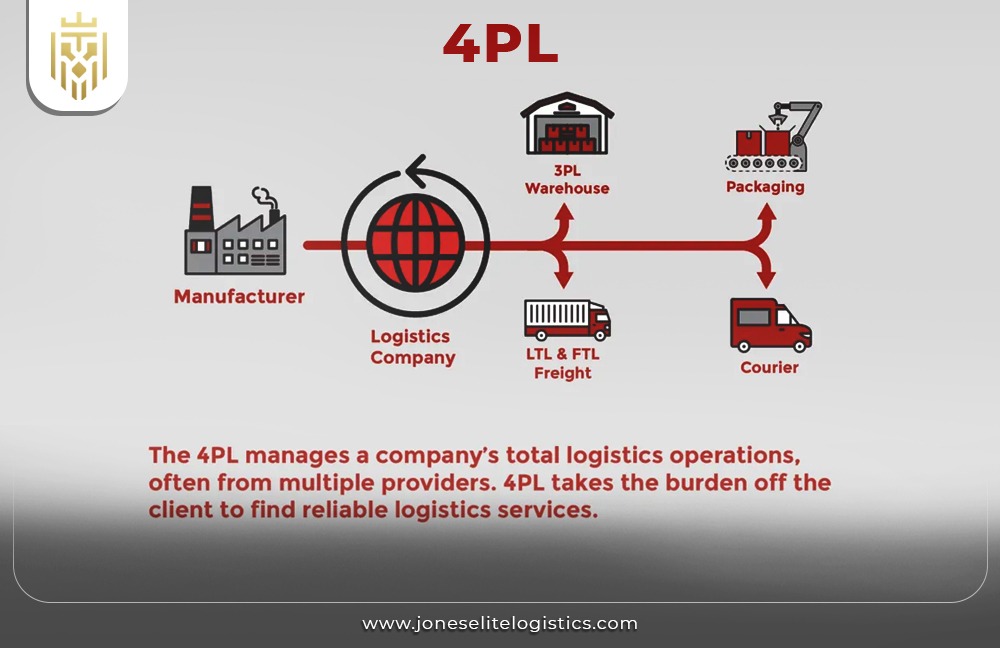
A Fourth-Party Logistics (4PL) provider acts as a single point of contact that manages the entire supply chain on behalf of a company. Unlike traditional logistics providers, 4PL companies oversee multiple logistics partners, technologies, and processes. Understanding real-world 4pl logistics examples can help businesses make informed decisions about supply chain optimization and long-term growth.
What Is 4PL Logistics?
Fourth-Party Logistics (4PL) is an advanced logistics model where a provider manages and coordinates all aspects of a company’s supply chain.
Key Responsibilities of a 4PL Provider
- Supply chain strategy development
- Transportation management
- Vendor coordination
- Warehouse oversight
- Data analytics and reporting
- Technology integration
- Cost optimization
- Risk management
A 4PL provider serves as a strategic partner rather than just a service provider.
Difference Between 3PL and 4PL
3PL (Third-Party Logistics)
A 3PL provider handles specific logistics functions such as:
- Transportation
- Warehousing
- Inventory management
- Order fulfillment
4PL (Fourth-Party Logistics)
A 4PL provider:
- Manages multiple 3PLs
- Oversees the entire supply chain
- Provides strategic planning
- Uses advanced analytics
- Optimizes logistics performance
The main difference is that 4PL providers control the entire logistics ecosystem rather than a single operation.
Top 4PL Logistics Examples in the Real World
Understanding successful 4pl logistics examples helps businesses see how this model works in practice.
1. DHL Supply Chain
DHL offers comprehensive 4PL services for multinational corporations.
How DHL Operates as a 4PL
- Manages global transportation networks
- Coordinates suppliers worldwide
- Provides real-time visibility
- Uses AI-driven analytics
- Optimizes shipping routes
Many manufacturing and retail companies rely on DHL to oversee their complete supply chain operations.
2. Accenture Supply Chain Services
Accenture combines technology consulting with logistics management.
Key Features
- Digital supply chain transformation
- Predictive analytics
- Inventory optimization
- Supplier collaboration
- Risk assessment
This is one of the most recognized 4pl logistics examples because it integrates technology and logistics management into one solution.
3. XPO Logistics
XPO Logistics supports large enterprises through advanced supply chain solutions.
Benefits Offered
- Transportation coordination
- Warehouse management
- Data-driven insights
- Process automation
- End-to-end visibility
Companies use XPO to simplify complex logistics networks across multiple countries.
4. GEODIS Supply Chain Solutions
GEODIS provides integrated 4PL management for global businesses.
Main Services
- Supply chain engineering
- Freight management
- Procurement support
- Inventory planning
- Logistics consulting
Their customized solutions help organizations improve efficiency and lower operational costs.
5. CEVA Logistics
CEVA Logistics offers complete supply chain orchestration services.
Industries Served
- Automotive
- Healthcare
- Consumer goods
- Technology
- Industrial manufacturing
This company demonstrates one of the strongest 4pl logistics examples for businesses operating across international markets.
Benefits of Using a 4PL Provider
Businesses are increasingly adopting 4PL services due to numerous advantages.
Improved Supply Chain Visibility
Companies gain access to real-time tracking and reporting across all logistics activities.
Cost Reduction
4PL providers negotiate better rates and optimize transportation routes to reduce expenses.
Better Resource Management
Organizations can focus on their core business while experts handle logistics operations.
Enhanced Scalability
As businesses grow, 4PL providers adjust supply chain strategies to support expansion.
Access to Advanced Technology
Many providers offer:
- AI-powered forecasting
- Cloud-based platforms
- Automation tools
- Data analytics dashboards
Industries That Benefit Most from 4PL Logistics
Manufacturing
Manufacturers often deal with complex supplier networks and international shipments.
Benefits include:
- Improved production scheduling
- Supplier coordination
- Inventory optimization
Retail and E-commerce
Retailers need efficient logistics to meet customer expectations.
Advantages include:
- Faster delivery
- Better inventory control
- Reduced shipping costs
Healthcare
Healthcare companies require strict compliance and precise inventory management.
4PL providers help maintain:
- Product integrity
- Regulatory compliance
- Efficient distribution
Automotive
Automotive supply chains involve thousands of components from multiple suppliers.
4PL services help coordinate these complex networks effectively.
How Technology Powers Modern 4PL Logistics
Technology is the foundation of modern 4PL operations.
Artificial Intelligence
AI helps predict demand and identify supply chain risks.
Internet of Things (IoT)
Connected devices provide real-time tracking of shipments and inventory.
Cloud Computing
Cloud platforms improve collaboration between suppliers, warehouses, and transportation providers.
Data Analytics
Advanced analytics enable businesses to make informed decisions based on performance data.
Choosing the Right 4PL Provider
Selecting the right partner is critical for success.
Evaluate Industry Experience
Choose providers with expertise in your specific industry.
Assess Technology Capabilities
Look for advanced tracking, reporting, and automation tools.
Review Global Reach
International businesses need providers with strong worldwide networks.
Check Performance Metrics
Analyze:
- Delivery accuracy
- Customer satisfaction
- Cost savings
- Operational efficiency
Future Trends in 4PL Logistics
The future of logistics continues to evolve rapidly.
AI-Driven Decision Making
Artificial intelligence will automate more supply chain planning tasks.
Sustainable Logistics
Companies are focusing on reducing carbon emissions through smarter transportation strategies.
Greater Supply Chain Visibility
Real-time monitoring will become standard across logistics operations.
Digital Twin Technology
Businesses will use virtual supply chain models to test scenarios before implementation.
These innovations will make future 4pl logistics examples even more sophisticated and efficient.
Conclusion
Modern businesses face growing challenges in supply chain management, from global sourcing to customer delivery expectations. By studying successful 4pl logistics examples, organizations can understand how fourth-party logistics providers create streamlined, efficient, and cost-effective operations. These providers offer strategic oversight, advanced technology, and complete visibility across the supply chain.
As supply chains become increasingly complex, 4PL solutions will continue to play a critical role in business success. Companies that embrace these services can improve operational performance, reduce costs, and build resilient logistics networks that support long-term growth. Investing in the right 4PL partner is not just a logistics decision—it is a strategic business advantage.
Frequently Asked Questions (FAQs)
What does 4PL stand for in logistics?
4PL stands for Fourth-Party Logistics, a model where a provider manages and coordinates an entire supply chain on behalf of a business.
How is 4PL different from 3PL?
A 3PL handles specific logistics functions, while a 4PL oversees the entire supply chain and manages multiple logistics providers.
What are some common 4PL logistics examples?
Examples include DHL Supply Chain, Accenture Supply Chain Services, XPO Logistics, GEODIS, and CEVA Logistics.
Who should use 4PL services?
Large enterprises, manufacturers, retailers, healthcare organizations, and companies with complex global supply chains benefit most from 4PL services.
What are the main benefits of 4PL logistics?
Key benefits include cost reduction, improved visibility, strategic planning, scalability, technology integration, and better supply chain performance.
Is 4PL logistics suitable for e-commerce businesses?
Yes. E-commerce companies can use 4PL providers to manage inventory, fulfillment, shipping, and customer delivery operations more efficiently.
Can a 4PL provider manage multiple 3PL providers?
Yes. One of the primary roles of a 4PL provider is coordinating and managing multiple 3PL partners within a unified supply chain strategy.
What is the future of 4PL logistics?
Future trends include AI-powered planning, sustainable logistics practices, digital twin technology, automation, and enhanced real-time visibility.









Leave a Reply