

Introduction
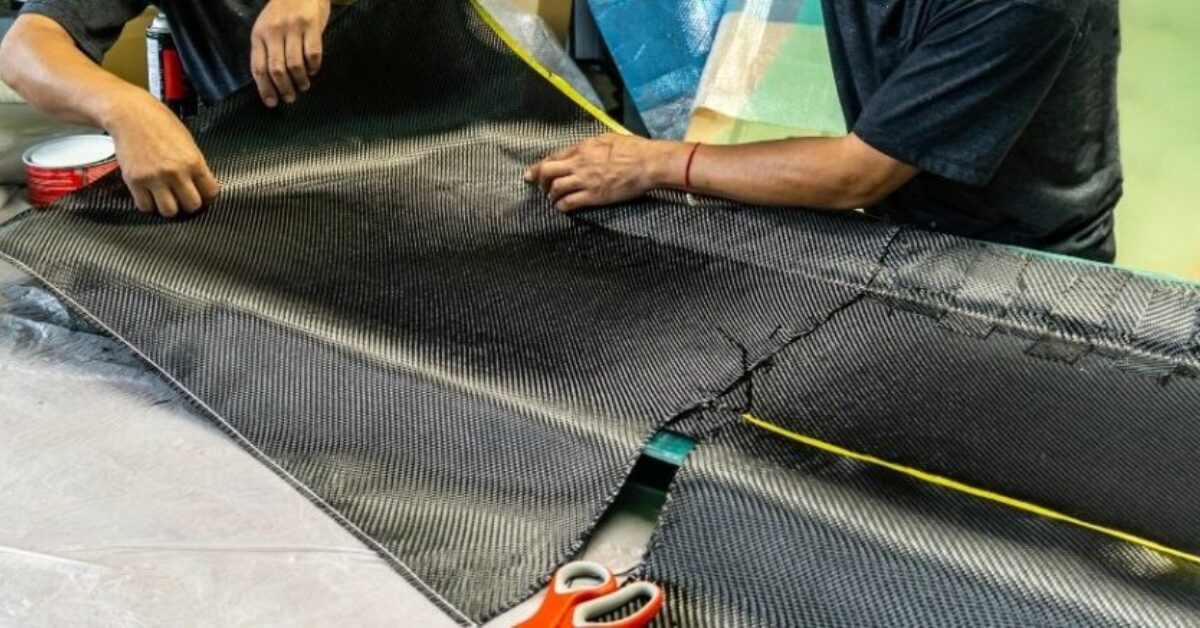
When people see the phrase en kevlar, they are usually looking at a product, material, or component made with Kevlar, a high-performance para-aramid fiber. Kevlar became famous because it combines impressive tensile strength with low weight. Unlike many traditional materials, it can deliver high strength without adding excessive mass. This makes it valuable in transportation, aerospace, sports equipment, industrial products, ropes, cables, and many other demanding applications.
Kevlar originated from research at DuPont and was developed by chemist Stephanie Kwolek in the 1960s. Commercial production followed in the early 1970s. Since then, engineers have developed different Kevlar grades with properties suited to particular jobs. Understanding what en kevlar means can therefore help consumers and professionals recognize why this material appears in products that need strength, durability, impact resistance, and low weight.
What Does En Kevlar Mean?
The phrase en kevlar is French and generally means “in Kevlar” or “made of Kevlar,” depending on the context. It can describe an object that contains Kevlar fibers or a composite material reinforced with those fibers.
Kevlar belongs to the aramid family of synthetic fibers. Its molecular structure gives the fiber excellent strength along its main direction. It also has good toughness, abrasion resistance, dimensional stability, and resistance to many chemicals. Technical references show that common Kevlar grades have a density of roughly 1.44–1.47 g/cm³, while their tensile strength can reach several gigapascals.
This combination explains why manufacturers choose Kevlar when they need a strong material that remains relatively lightweight.
How Is Kevlar Made?
Kevlar is an aromatic polyamide fiber. Manufacturers create the polymer through a chemical process and then spin it into highly oriented fibers. During production, the molecular chains become strongly aligned along the fiber direction. This alignment contributes significantly to the material’s high tensile strength.
The resulting fibers can become yarns, fabrics, cords, or reinforcement materials. Manufacturers can also combine them with resins to produce fiber-reinforced composites.
Different grades provide different balances between strength, stiffness, and elongation. Kevlar 29, for example, is known for toughness, while Kevlar 49 offers a higher modulus and suits applications that require greater stiffness. Other grades have been developed for specialized performance requirements.
Key Properties of En Kevlar Materials
High Strength With Low Weight
One of Kevlar’s biggest advantages is its strength-to-weight ratio. Its density is considerably lower than that of steel, yet its tensile performance is very high. This allows engineers to reduce weight while maintaining structural performance.
Excellent Impact Resistance
Kevlar can absorb significant amounts of energy without immediately breaking. Its toughness makes it useful in products exposed to repeated impacts, vibration, or mechanical stress.
Heat and Flame Resistance
Kevlar performs well at elevated temperatures compared with many ordinary synthetic fibers. It does not behave like typical thermoplastics that simply melt when heated; instead, it gradually degrades at sufficiently high temperatures. Aramid fibers can provide useful performance in demanding thermal environments.
Chemical Resistance
Kevlar has good resistance to many organic solvents and chemicals. However, it is not completely resistant to every chemical environment, and strong acids, certain salts, moisture, and ultraviolet exposure can affect long-term performance.
Common Uses of Kevlar
Kevlar’s unusual combination of properties gives it a broad range of applications.
Automotive Applications
Manufacturers use aramid fibers in various automotive components where strength, low weight, durability, and resistance to heat or vibration matter. Kevlar reinforcement can appear in tires, hoses, belts, and composite components. Its lightweight nature can help engineers manage overall vehicle weight.
Aerospace and Marine Engineering
Weight matters enormously in aircraft and marine engineering. Kevlar-reinforced composites can provide strength without the mass associated with some traditional materials. Engineers have used aramid composites in aircraft components, marine structures, and other high-performance designs.
Sports Equipment
Kevlar appears in several types of high-performance sports equipment. Manufacturers can combine it with composite materials to create products that need stiffness, toughness, and low weight. Examples include certain rackets, bicycles, boats, skis, and other sporting equipment.
Industrial Products
Industrial applications include ropes, cables, reinforcement materials, protective fabrics, and fiber-optic cable components. Its high tensile strength and low density make it especially useful where manufacturers need durable reinforcement without creating a heavy product.
Advantages and Limitations
A major advantage of en kevlar products is their excellent strength-to-weight performance. Kevlar also offers good toughness, fatigue resistance, abrasion resistance, and thermal stability. These qualities make it useful in environments where ordinary textiles or plastics may not provide enough performance.
However, Kevlar is not perfect. Its compressive performance is weaker than its tensile performance. The fibers can also absorb moisture, and prolonged exposure to ultraviolet radiation may reduce performance. Another challenge appears when manufacturers use Kevlar inside composite materials because bonding between the fibers and resin can be difficult.
These limitations mean engineers must select the correct grade, construction method, and protective treatment for each application.
En Kevlar vs. Carbon Fiber
Kevlar and carbon fiber both provide high performance, but they excel in different areas. Carbon fiber generally offers very high stiffness, while Kevlar is valued for toughness and impact resistance. Kevlar also has a lower density and can handle certain impact and fatigue conditions particularly well.
For some advanced composite designs, engineers combine Kevlar with carbon or glass fibers. Such hybrid construction can balance stiffness, toughness, weight, and cost.
How to Choose a Kevlar Product
When selecting en kevlar materials, buyers should first identify the intended application. Check the specific Kevlar grade, fiber construction, strength requirements, temperature conditions, chemical exposure, moisture environment, and expected mechanical loads.
It is also important to understand that the word “Kevlar” alone does not guarantee identical performance. Different grades have different tensile properties and stiffness levels. A product designed for flexible reinforcement may perform differently from a rigid structural composite.
Frequently Asked Questions
Is Kevlar a natural material?
No. Kevlar is a synthetic para-aramid fiber. Its properties come from its aromatic polyamide chemical structure and highly oriented molecular chains.
Why is Kevlar lightweight?
Kevlar has a relatively low density compared with many structural materials while maintaining high tensile strength. This gives it an excellent strength-to-weight ratio.
Does Kevlar melt?
Kevlar does not behave like ordinary thermoplastic fibers. At sufficiently high temperatures, it degrades rather than simply melting in the conventional sense.
Can Kevlar be used outdoors?
It can be used outdoors, but designers must consider UV exposure and moisture. Protective coatings or suitable construction can help manage environmental effects.
Conclusion
Kevlar remains one of the most interesting high-performance synthetic fibers because it combines low weight with exceptional tensile strength and toughness. From automotive components and aerospace composites to sports equipment, ropes, cables, and industrial fabrics, its properties allow engineers to create products that need reliable performance without unnecessary weight.
The meaning of en kevlar ultimately depends on the product and its construction, but the underlying idea remains the same: Kevlar provides a powerful combination of strength, durability, and lightness. Its limitations, including sensitivity to UV exposure, moisture, and compression, must also receive careful consideration. When manufacturers select the appropriate grade and design, Kevlar can continue to play an important role in advanced materials and engineering.











Leave a Reply